Dumb Ways to Advertise?

Integrated Marketing Campaigns or IMC for short. You may not exactly be aware of what campaigns are considered, ‘Integrated Marketing’ but I can assure you that they are pretty much everywhere. Integrated Marketing can take many forms, with those ranging from social media to traditional means of advertising such as posters and billboards. But I will mainly be focusing on the digital side of IMCs.

Metro Trains created the “Dumb Ways to Die” campaign towards the end of 2012. The campaign had the goal of reducing train related accidents as they believe many could have been avoided. Metro had a few objectives, with one being, obtaining 10,000 pledges to be safe around trains as well as a reduction of accidents by 10% over the span of 12 months. They also aimed to create a culture that being safe around trains is not hard.

Image result for dumb ways to die

Metro Trains were able to create quite a successful advertising campaign by utilising Integrated Marketing. Metro used a number of IMC techniques to promote their message of safety around trains, but their main ones being a song posted to YouTube and iTunes while also creating a mobile game which could be downloaded from the App Store.

Image result for dumb ways to die

 According to a study done on the Metro campaign by Danish Chan and Adrian Mills in 2013, the song Metro created eclipsed over 44 million views on YouTube and was downloaded over 77,000 times form the iTunes Store. The campaign was successful as 46% of their main target audience (18-29 year-olds) claimed to have seen at least one form of the advertisement. After the first four months of the campaign, Metro had gained 44,000 pledges to be safer around trains which is over four times the amount they were seeking in 12 months. Between the months of November to January of 2011/12, there were an average of 13.29 near misses per million kilometres. 12 months later in the same months, that number dropped to 9.17 per million kilometres.

Given those results, I would say that the “Dumb Ways to Die” campaign was quite successful as it promoted safety around trains in a fun and engaging way.

What are your personal preferences when it comes to marketing? Do you prefer more traditional means or these types of Integrated Marketing Campaigns?

How Google Knows What Ads You Want To See

What if I told you that one of the best ways to advertise your business was for someone to stumble upon it while searching for something similar or in the same field? That is what Google and other search engines can provide through paid advertising, but I am just going to focus on Google as it is without a doubt the most used search engine on the internet as it has a market share of 74.8% on desktop and an 80.79% share on mobile (Net MarketShare).

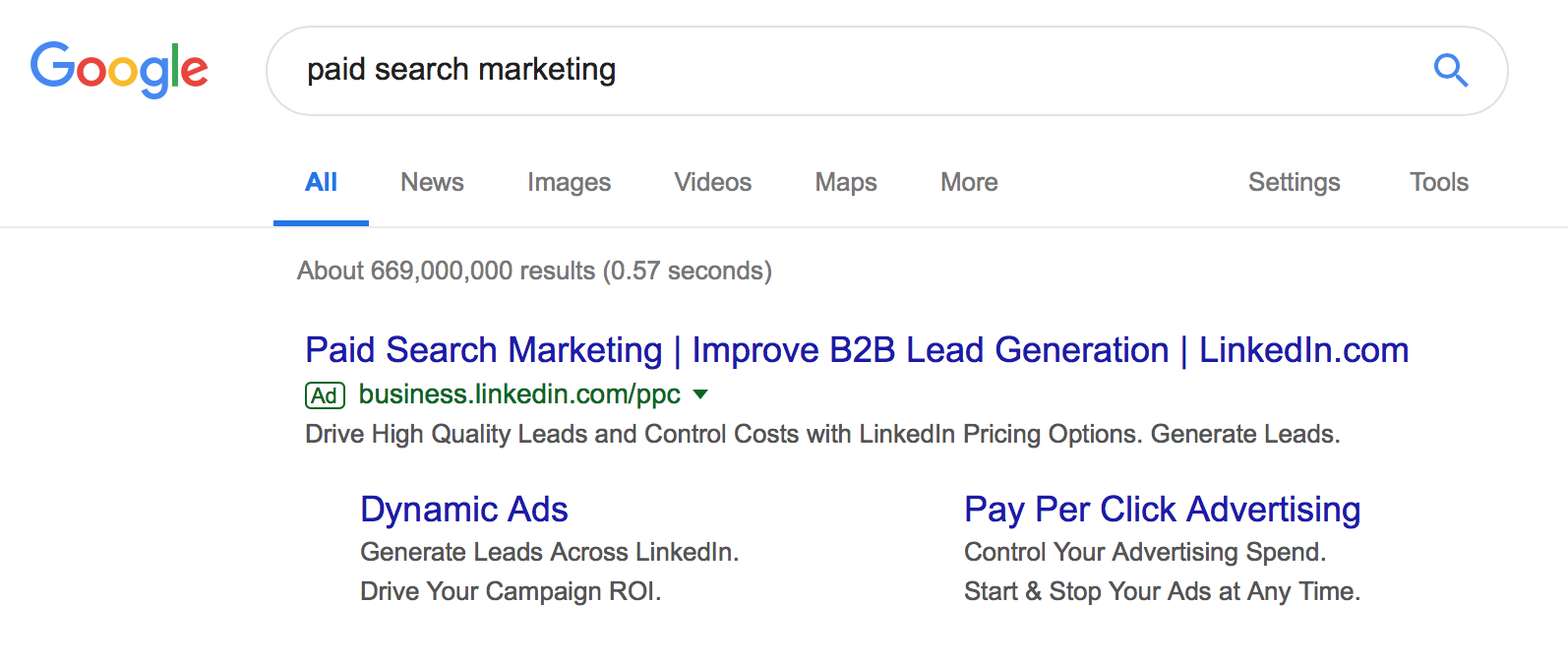
Through the use of paid advertising, Google will push your ad towards the top of the results if it relates to the field that someone has typed into the search bar.  This is known as Search Engine Optimisation (SEO). I conducted my own experiment just to see how common these advertisements pop up when searching for something. I searched for “paid search marketing” (below) in an attempt to gather information about the topic and see if there was anything in the news about this area. While I wasn’t actually looking to purchase any advertising, Google still recommended an advertisement. I personally don’t usually click on any of these advertisements when using Google as I generally have good idea of what I am exactly looking for but I can see how these ads might be helpful to some users.

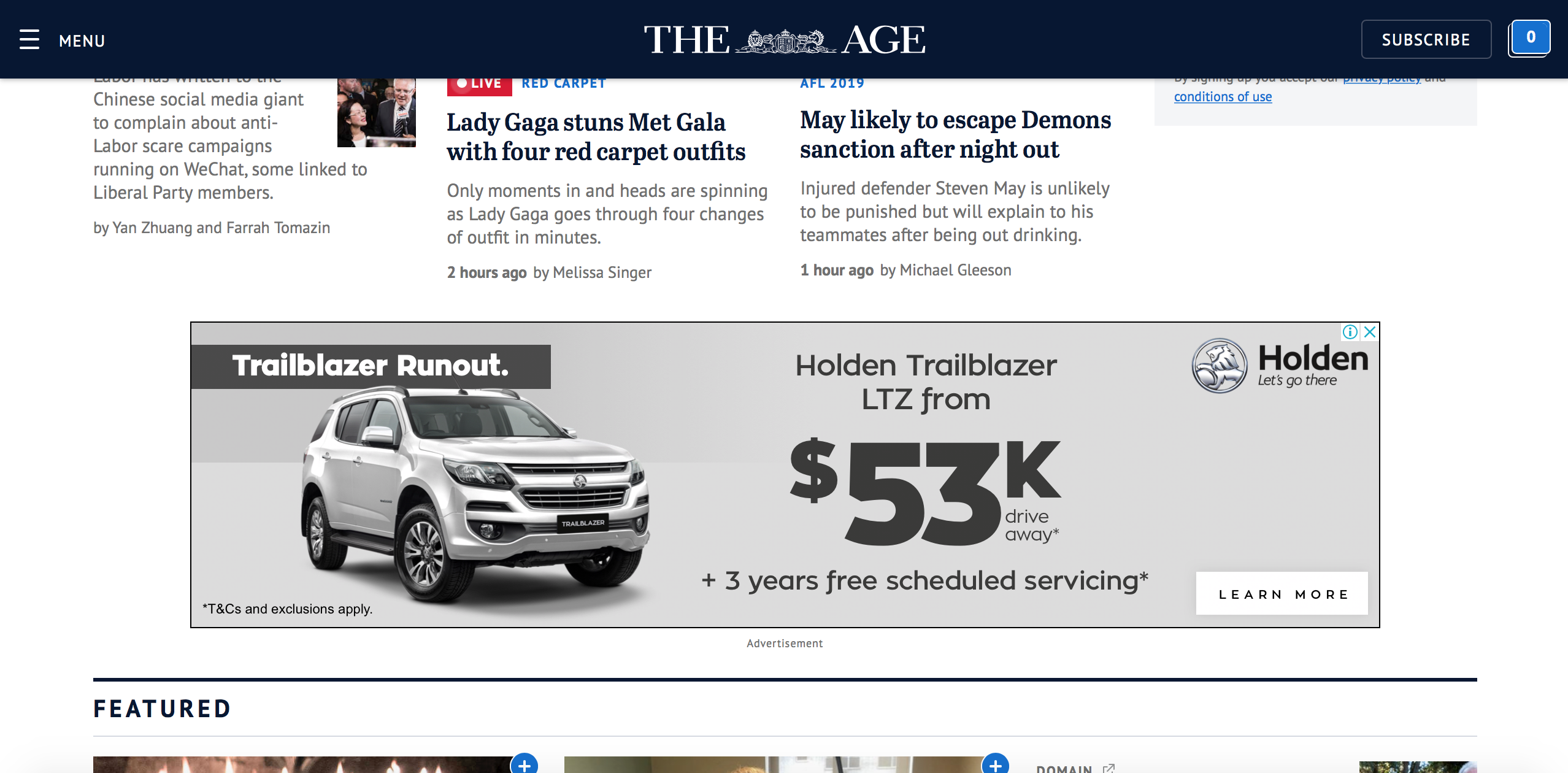
SEO is not the only form of search engine advertising as another version is called ‘pay-per-click’ (PPC) advertising and I find is much more annoying. These PPC ads make up approximately a third of Google’s revenue and I can see why as they are on most websites you visit. I have provided another example (below) of how these PPC ads work and as you can see this screenshot was taken form The Age website. These ads are specifically tailored to what you search and what Google thinks you want to see. On the night of the 6thof May, I was searching for cars and even went on to the Holden website, just to see how much different types would be. This screenshot was taken on the 7thof May and as you can see the advertisement has popped up in PPC form. I don’t currently own a car and have not been searching for them recently, you’ll have to take my word, but since that was what I last searched up on Google, they thought it would be great to advertise it for me. PPC also leads into another topic that I have covered recently and that is ‘Big Data’.

Essentially Big Data keeps track of your recent searches on Google or even likes on Facebook then tailors specific ads to you based on those searches, hence why I received a Holden ad on The Age website. I have covered it more in depth in a few of my recent blog posts so you can check it out there.

What are your thoughts on Google advertising? Do you think it is beneficial, or do you even find it annoying and even a bit creepy? Would love to hear from you in the comment section.

Hey Alexa, are you spying on me?

The Internet of Things or IoT for short, pretty much describes all of the smart devices we use daily whether it is our smart phones or smart speakers in our homes. Over 10 years ago, smart phones took the world by storm as these devices were able to connect people to the internet whenever and practically wherever they wanted. Fast forward to today’s age, we have endless smart devices such as smart watches, smart headphones, smart speakers and even smart refrigerators, it’s quite astonishing really. 

The main selling point of these smart devices is that they are compatible with other smart devices. For instance, you can set up your smart watch to be synced with your smart phone and then have the ability to receive text messages on your watch or even change the music playing on your phone through your watch. Having all of these devices makes people feel organised and in control as they can access whatever they need from multiple devices.

Image result for alexa

There are obviously some draw backs with smart devices, just like any product. The one device I will be focusing on is Amazon’s ‘Alexa’. Alexa is a home smart speaker and has a wide range of functions. The speaker is voice activated so you don’t even need a smart to operate it. However, Alexa saves and stores everything you have said to it on an Amazon server. An article written by Adam Clark Estes from Gizmodo (https://www.gizmodo.com.au/2019/04/the-terrible-truth-about-alexa/), states that Alexa and other home devices may be spying on us and while that may or may not be true, there is some evidence to prove that it is true. For one, everything you say to Alexa is stored on a server and almost builds a personal file for Amazon. Secondly, while Alexa is programmed to only respond and wake when you call on it. The microphone is always on and picks up everything you say while near it, even if that dialogue doesn’t actually wake Alexa. These privacy concerns with smart devices leads me into my next topic, Big Data.

Image result for facebook

Big Data is essentially large quantities of data analysed by computers to identify any patterns or trends associated with one person or a group people. I’m sure many of you have experienced Big Data at one point in your life and an example that comes to mind quickly is specifically tailored ads to individual people based off of previous google searches or even your ‘likes’ on Facebook. Back in March of 2018, Facebook came under serious fire for saving and storing the personal data of over 50 million users that didn’t even consent to such activity for political campaigning reasons (https://www.theguardian.com/news/2018/mar/18/data-scandal-is-huge-blow-for-facebook-and-efforts-to-study-its-impact-on-society). The worst part is that all of this data was available to purchase form Facebook by other companies. It is quite scary that these companies, just not Facebook, have all of this information on us and can then tailor certain ads or sites based on our internet usage on separate websites.

I personally think these smart devices are great in terms of their intended purpose however, the fact that these devices and websites are able to keep an extensive history on us on their company servers is quite unnerving. 

How do you feel about companies essentially keeping a history of your searches and such? Do you think it is too invasive or not at all?

AirDrop = Free Shoes?

Mobile marketing is everywhere and simply the future in the world of marketing. There are all different types of mobile marketing such as mobile ads, coupons, websites, apps, payments and location based mobile marketing and I’m sure you all encounter multiple of these just in one day. As of 2018, according to statista, approximately 2.53 billion people across the world were using smartphones which is a huge number and no doubt why mobile marketing is the way of the marketing future. Out of these 2.53 billion people, a large percentage of them are going to run into at least one type of mobile marketing technique as listed above.

There is a new type of marketing that is starting to emerge and uses mobiles as an access point, this is called experiential marketing. Experiential marketing is defined by ngdata.com as “An advertising strategy that focuses on helping consumers experience a brand”. Donald Glover, also known as Childish Gambino, recently used this new experiential marketing technique at the Coachella Festival in California. On April 12th, Glover used Apple’s AirDrop feature to send out a picture of his new shoes in which he collaborated with Adidas. Everyone who accepted the photo on their phone, got a free pair of the shoes. It was smart by Adidas and Glover as everyone at the festival would have most likely been checking/using their phones throughout the day in order to post stuff to social media. However personally, if I was there I probably wouldn’t have been able to get the shoes as I keep my Bluetooth and AirDrop off when I’m not expecting something from someone I know in order to prevent random and unwanted photos or videos. 

Another popular type of mobile marketing is advertisements in apps and mobile games, which I find really annoying. This form of marketing proves both beneficial for the actual company who’s advertisement is being shown but also the app developer as both parties can receive money. Now you may be asking how the app developer can be paid as well, this is due to a freemium business model which I discussed in an earlier blog post, but essentially some apps can have a paid version which removes all advertisements. So consumers may see an ad and go purchase that product or purchase the ‘premium’ version of the app to remove all ads.

I’ll leave you with this question, do you think a mobile marketing technique such as Glover’s AirDrop stunt is going to be effective in the future or perhaps is it too intrusive? I would love to read your comments about this!

“DO NOT EAT” – Gronk

Image result for gronk tide
Former New England Patriots Tight End Rob Gronkowski

I am sure you all have stumbled across viral videos or viral trends via the internet and then potentially gone on and discussed what you saw with your friends or family. Viral marketing is a marketing strategy that plays on these viral events and companies use these to help market their products. In some instances, companies create their own viral content such as Old Spice. Old Spice’s advertising videos for deodorant were such a big hit that they went viral because of how funny they were.

There is a certain degree of luck when it comes to viral marketing as it is unlike traditional forms of marketing. In order for something to go viral, most of the audience has to be talking about the specific content and this normally happens if a video is really good or in some cases, really bad. There is no middle of the pack when it comes to viral content as it is just not a talking point.

One advertisement that sticks out in my mind is one by the company Tide. Unless you did not have internet at the start of 2018, you must be aware of the ‘Tide Pod challenge’ that took the internet by storm. For those that are unaware, this ‘challenge’ was simply people eating laundry detergent pods. Pretty silly, I know. Tide enlisted the help of NFL superstar Tight End Rob Gronkowski, better known as Gronk, to help spread the message that eating Tide Pods was not okay. In an interview with SBNation, Gronk said that Tide contacted him to do a PSA about not eating Tide Pods. Gronkowksi stated that kids “can relate to me, a lot of kids watch the show, watch football, so it worked out well.” (SBNation, 2018). Tide not only used Gronk as a way to tell kids to stop eating the Tide Pods but also would have potentially increased sales as he doubled as an ambassador for Tide.

Image result for gronk tide

Viral Marketing can be seen as being contagious. In the marketing world, when something is contagious it must follow some of these ‘STEPPS’. Not all six of these principles are required in order for a campaign to go viral as some of them would be suited for different types of products.

Social Currency: The message from the ad should give people ‘social currency’/’bragging rights’.

Triggers: If a product has certain triggers that make people remember the product, then they might begin to talk about it.

Emotions: The message should make the audience feel a certain level of physiological arousal or activation. Messages can have both a positive or a negative emotional reaction.

Public, Social Proof: Many people are conformed to societal standards and all act in a similar manner so when people see someone purchase a new product, they might feel more inclined to purchase the same thing or any new product in general. 

Practical Value: If a message contains useful information, people are likely to pass on the message as it can benefit others.

Stories: Stories seem to be more effective as it gives a personal touch and makes the message feel more relatable to the audience as well as being easily remembered.

Do you think it is smart for companies to use these viral trends as a way to market their products or should they stick to creating their own unique advertisements?

References:

SBNation – https://www.sbnation.com/2018/7/24/17603436/rob-gronk-gronkowski-tide-pods-challenge

What Business Model made Fortnite so Successful?

Fortnite. I am sure you all have heard of it and probably even played it. For those of you who don’t know, Fortnite is a free-to-play battle royale game, that was released late 2017 developed by Epic Games and has since taken the world by storm. The game has become so popular that parents have started asking themselves whether their kids are addicted simply because they are spending so much time on it. Fortnite is unlike any other game we have seen in the past with how popular it has become as it has a target audience of kids and adults. 

/var/folders/zc/6cl_3wdn2sj61b1_lccbl3rh0000gn/T/com.microsoft.Word/WebArchiveCopyPasteTempFiles/e8xzjhqicsl21.png
2019 Fortnite Survey. Source: 10roar.com

Now Fortnite is ‘free-to-play’ but how has the game managed to earn a “record $2.4bn in 2018”? (The Telegraph, 17/01/19) It’s quite simple really. Fortnite follows a ‘Freemium’ type business model. The way a Freemium business model works is that you as a consumer are able to access the basics of a product/service at no cost, but if you choose to upgrade to the ‘premium’ of that product/service by paying, you are able to access better features. Fortnite draws new players in by making the game free-to-play, all you need is a phone or a game console/computer and then you can start playing by downloading the game. 

Fortnite offers in-game purchases which grant no competitive advantage which I think is why players spend any money on the game at all. In order to attain one of these items such as a “skin”, which just alters your character’s appearance, or an in-game dance, you must purchase an amount of the in-game currency called “v-bucks”. I will say that I have made at least one in-game purchase and do not regret it because you know what you are getting, whereas in other games, e.g. NBA2k’s MyTeam mode, you can buy ‘card packs’ which do not guarantee anything worth of equal value… but that’s another story for another day. 

Fortnite has also been able to produce an enormous revenue figure due to the cost alone of in-game purchases. There are “skins” which cost AU$28 (US$20) at this moment in time, but many players are able to justify to themselves that purchasing a cosmetic for this much is fair due to the fact that the game is ‘free-to-play’. Some players have even said that purchasing these items is a way of supporting and giving back to the developers, seeing as in theory no one has to spend any money to play. To me personally, I think that statement by some players is fair as the game would not be what it is today without financial support from consumers.

Ultimately, I think Epic Games were able to generate so much revenue due to their Freemium business model and enticing players just to try out the game. If they were to perhaps charge players to initially play Fortnite, I don’t think the game puts up the same record setting numbers.

What are your thoughts on Epic Games’ business model? Do you think Fortnite would be as successful today if it wasn’t free-to-play? I’m interested to hear your comments/feedback.

Marketing a Product for International Women’s Day

A very important day was celebrated around the world last week. This of course being International Women’s Day which occurred on Friday the 8thof March. Not only do we have this special day to celebrate the women in our lives but it is also a main factor in the progression of women’s rights movement. 

To honour this day, the Barbie brand, under the Mattel company, rolled out a new doll each for the 38 new ‘Barbie Role Models’. This move by the brand is in an attempt to break down traditional barriers formed by society as to what jobs women can and can’t do.

In order to spread the message about the new International Women’s Day release, Barbie promoted the new dolls on their Instagram by posting numerous pictures and videos using the hashtags “#MoreRoleModels” and “#CloseTheDreamGap”. Barbie used one of their social media platforms to market their new products which falls under a medium social presence/media richness and a high self-presentation/self-disclosure in the social media classifications table (Kaplan&Haenlein, 2010). This falls under a medium Social presence due to users only being allowed to comment on the posts or ‘like’ it. It is categorised as high self-presentation/self-disclosure as users are generally using their personal profiles to interact with the Instagram posts.

page4image1817280

I think that this was a good way to market the new products introduced by Barbie as most of their target audience would be using Instagram as it directed towards a younger demographic of girls. While Instagram is insanely popular and Barbie has roughly 1.3 million followers (as of 11thMarch 2019), they chose not to advertise on Facebook which is odd as Facebook as well is not only a largely popular social media platform but also, they have 14 million likes which is more than ten times the amount of their followers on Instagram. Ultimately while Barbie does have more likes on their Facebook, they are not reaching as many people as on Instagram, with just 3,700 views on a video posted on their Facebook page from the 26th of March 2018. To compare the pair, one of their ‘Barbie Role Models’ Instagram videos got over 176,000 views which was posted on the 7thof March 2019. 

I do feel as though from personal experience it is easier to miss posts on Facebook but generally you will see most posts by pages on Instagram so it was a good move by Barbie to promote on their Instagram.

References:

Kaplan, A & Haenlein, M 2010, ‘Users of the world, unite! The challenges and opportunities of Social Media’, Business Horizons, vol. 53, issue 1, pp. 62.

Design a site like this with WordPress.com
Get started